
AI disclosure: this content, including any imagery, was artificially generated.
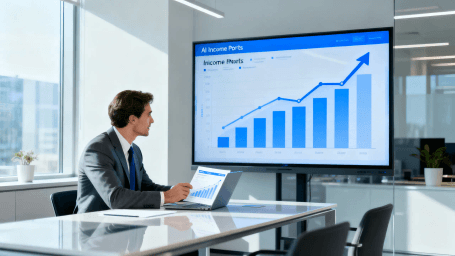
TL;DR: Paid search costs keep rising because the auction is more crowded every year. Understanding what drives paid search costs is the first step to protecting your margins.
Table of Contents
Paid search is getting more expensive every year, and 2026 is the steepest rise yet.
Professional services take the worst of it: legal is the most expensive area to advertise in, with B2B and home improvement close behind, and the cost of winning a click keeps climbing — campaigns in major cities pricier still.
The causes are structural, not seasonal, which means waiting for prices to fall is not a plan. The firms protecting their margins are the ones reducing how much they depend on the ad auction in the first place.
Paid Search Costs: Just how expensive has paid search become for professional services?
Expensive — and getting more so.
Legal sits right at the top, because a single case can be worth so much that firms bid aggressively for every click; that makes legal the priciest area in professional-services advertising, with insurance, finance and B2B close behind.
Campaigns in major cities cost more again. The high-value, high-intent categories are where clicks are most expensive — and where prices keep rising.
Your own cost depends on your field, location, ad quality and competition, but the direction is unmistakable, and prices are forecast to keep climbing through the rest of 2026.
Why is paid search rising so fast in 2026?
Several forces push in the same direction at once, and none are temporary.
The biggest shift is AI answers in search. AI-generated summaries now resolve many questions directly at the top of the results page, so fewer people click the free listings beneath.
When organic clicks dry up, more demand pools into the paid slots — and a smaller pool of clicks at higher demand means higher prices.
Auction competition has widened too.
Automated campaign types now spread bidding across far more ad inventory, and a wave of venture-funded, AI-era businesses has entered high-value categories with deep pockets and aggressive targets.
On top of that, the loss of third-party tracking signals has made targeting less precise, forcing advertisers to bid higher to keep the same volume, while automated bidding increasingly chases conversion value rather than holding down cost.
Each factor is permanent. Together they have reset the floor.
Are rising clicks always bad news?
Not entirely. Costs have risen year after year, but so have conversion rates, so a well-managed campaign can be more efficient now than it was a few years ago.
The danger is not the price of a click in isolation — it is paying a premium for a click and then wasting it.
An expensive, hard-won click that lands on a slow page, hits a contact form nobody answers until tomorrow, or reaches a firm with no after-hours response is money set on fire.
As costs rise, the gap between firms that convert their clicks and firms that leak them widens fast.
What can professional-services firms do about it?
The instinct is to bid harder. The better move is to need the auction less — starting with the clients you have already paid to acquire once, which is what customer revival campaigns are for. Three levers matter most, and AI automation drives all three.
First, speed-to-lead. The provider who responds to an enquiry first usually wins it, yet most firms let fresh enquiries sit for hours. Automated intake, instant email and chat responses, and AI voice answering mean every expensive click gets an immediate reply — day or night. That single change lifts the return on the clicks you are already buying.
Second, conversion of existing traffic. Automated qualification, follow-up sequences and booking tie a paid click to a booked consultation instead of a dead form-fill. You spend the same on the click and win more from it.
Third, getting found where the clicks went. As AI answers and assistants like ChatGPT and Perplexity absorb the questions buyers used to type into a search box, appearing inside those AI answers becomes its own channel — one you do not pay per click for. Structuring your site so AI systems cite it is the long game that reduces auction dependence entirely, and it is core to what we build at AS Consulting.
There is also a measurement shift that makes all of this visible. Most firms still watch the price of a click, which is the one number they cannot control and which only ever goes up.
The metric that actually matters is the cost to win one paying client, end to end.
Track that instead and the value of automation becomes obvious: a firm paying more per click but converting far more of its enquiries has a lower true acquisition cost than a rival who bid less and let half their clicks go cold.
Instrument the response time on every enquiry, measure how many turn into booked consultations, and the case for automating the funnel makes itself.
The throughline is simple: you cannot control the auction, but you can control how much you depend on it.
Firms that automate intake, response and AI visibility turn a rising-cost problem into a competitive edge, because their cost to win a client falls even as everyone’s cost-per-click climbs.
Key Takeaways: Paid Search Costs
- More bidders — paid search costs climb as competitors flood the same keywords.
- Quality Score pressure — weak landing pages push paid search costs higher.
- Broad match creep — loose targeting quietly inflates paid search costs.
- Seasonality — peak demand spikes paid search costs for professional services.
- Owned channels — automation and organic reach reduce reliance on paid search costs.
Apply Paid Search Costs Control to Your Marketing
To stop paid search costs eating your budget, build channels you own.
- Beginner guide to building your first AI automation
- AI tools I use daily for consulting
- Why non-technical business owners need n8n
For the wider business case, see Deloitte’s research on Deloitte intelligent automation survey.
FAQs: Paid Search Costs
Will paid search costs come back down in 2026?
It is unlikely. The main drivers — AI answers reducing organic clicks, wider auction competition, and the loss of third-party tracking — are structural. Forecasts point to further rises through the end of 2026, not a fall.
Which professional-services area has the most expensive clicks?
Legal — the most expensive area in professional-services advertising, especially personal injury, and pricier still in major cities. Insurance, finance and B2B follow closely.
Why are AI answers making paid search more expensive?
They resolve questions directly in the results, so fewer people click the free listings. That demand shifts into the paid slots, and higher demand for a smaller pool of clicks pushes prices up.
Does AI automation replace paid search?
No — it reduces your reliance on it. Automation makes the clicks you already pay for convert harder and helps you get found in AI answers you do not pay per click for, so paid search becomes one channel among several rather than your only lifeline.
Rising click prices are a structural shift, not a blip. The firms that win in 2026 are the ones that stop trying to outbid the auction and start reducing their dependence on it. If you want to see where automation could cut your cost to win a client, that is exactly the conversation we have at AS Consulting.
Automate smarter.